Histogramm-in-Boxplot
vis
2023
schoice
Aufgabe
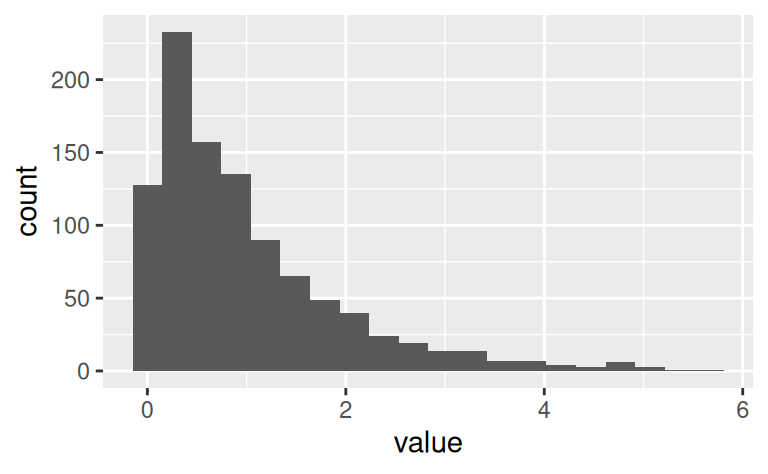
Histogramm:
Boxplots:
[[1]]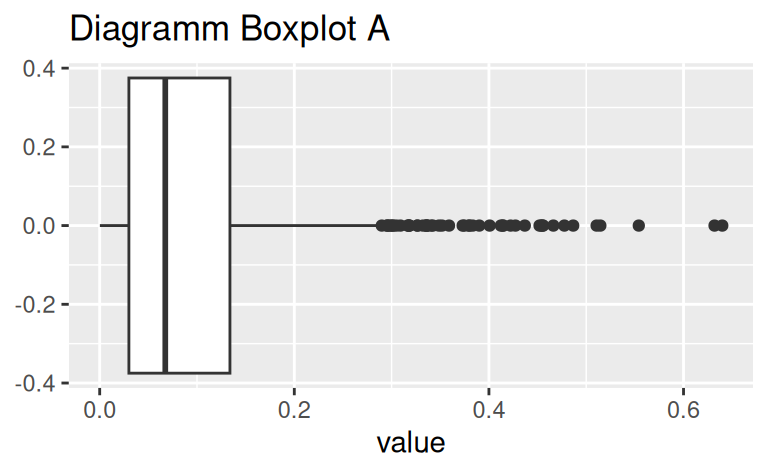
[[2]]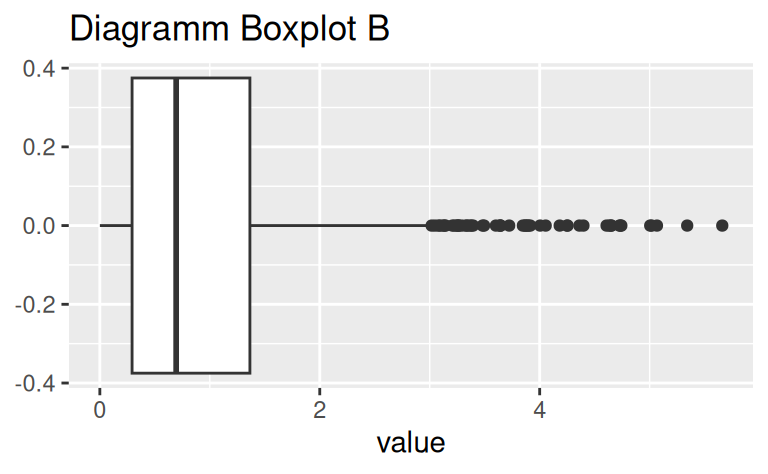
[[3]]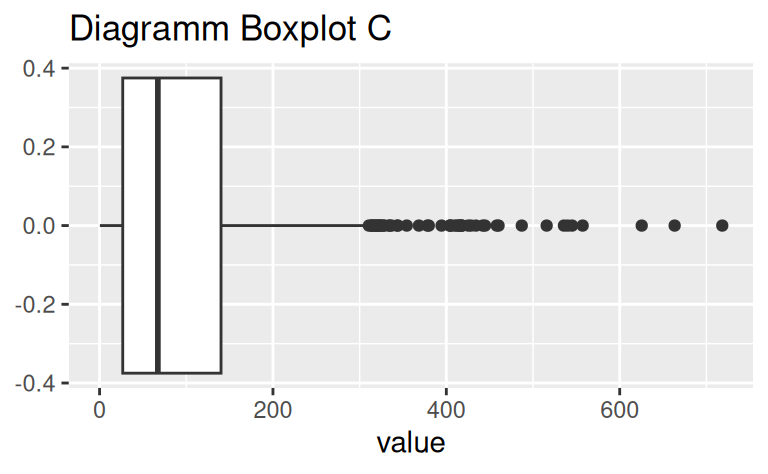
[[4]]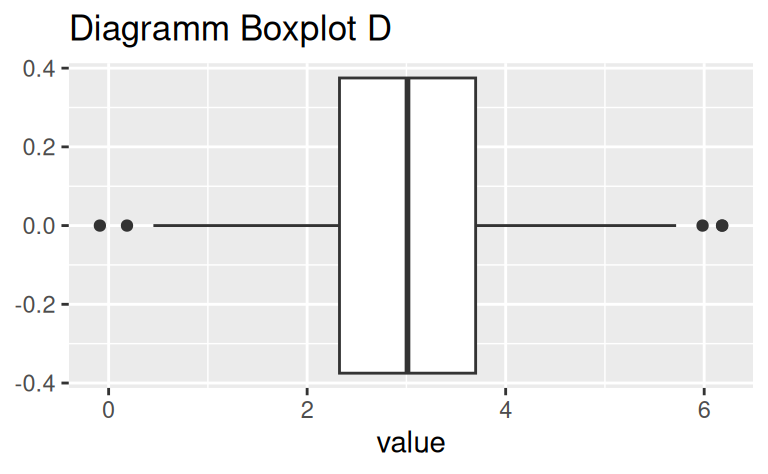
[[5]]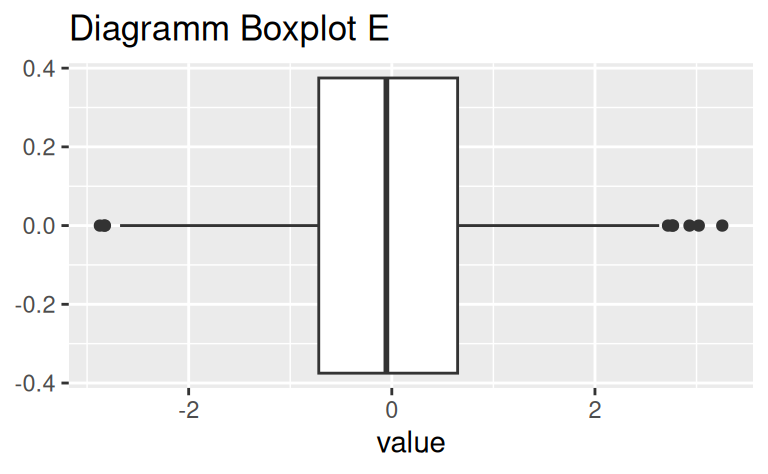
Lösung
Boxplot Boxplot C spiegelt das Histogramm am genauesten wider.
Categories:
- vis
- ‘2023’
- schoice
February 26, 2023
Histogramm:
Boxplots:
[[1]]
[[2]]
[[3]]
[[4]]
[[5]]
Boxplot Boxplot C spiegelt das Histogramm am genauesten wider.
Categories:
---
exname: histogramm-in-boxplot
extype: schoice
exsolution: r mchoice2string(boxplot_df$is_correct, single = TRUE)
exshuffle: no
categories:
- vis
- '2023'
- schoice
date: '2023-02-26'
slug: Histogramm-in-Boxplot
title: Histogramm-in-Boxplot

---


```{r libs, include = FALSE}
library(glue)
library(tidyverse)
library(mosaic)
library(testthat)
library(exams)
```


```{r global-knitr-options, include=FALSE}
knitr::opts_chunk$set(fig.pos = 'H',
                      fig.asp = 0.618,
                      fig.width = 4,
                      fig.cap = "",
                      fig.path = "",
                      cache = FALSE)
```


# Aufgabe


**Histogramm**:

```{r data-gen, echo = FALSE}
n <- 1000  # sample size

d <- rexp(n) %>% as_tibble()

ggplot(d, aes(x = value)) +
  geom_histogram(bins = 20)
```


**Boxplots**:


```{r boxplot-data, echo = FALSE}

d_false1 <- rnorm(n = n) %>% as_tibble()
d_false2 <- rexp(n = 1000, rate = 10) %>% as_tibble()
d_false3 <- rexp(n = 1000, rate = 0.010) %>% as_tibble()
d_false4 <- rnorm(n = n, mean = 3) %>% as_tibble()


```

```{r generate-boxplots, echo = FALSE}

boxplot_df <- tibble(
  boxplot_data = list(d,
                     d_false1,
                     d_false2,
                     d_false3,
                     d_false4),
  is_correct = c(T, F, F, F, F),
  id = c("d", "d_false1", "d_false2", "d_false3", "d_false4")) %>%
  sample_n(size = nrow(.)) %>%   # shuffle it
  mutate(boxplot_id = glue("Boxplot {LETTERS[1:5]}"))


gg_boxplot <- function(data, title) {
  ggplot(data = data) +
    aes(x = value) +
    geom_boxplot() +
    ggtitle(glue("Diagramm {title}"))
}


map2(.x = boxplot_df$boxplot_data,
     .y = boxplot_df$boxplot_id,
     .f = ~ gg_boxplot(.x, .y))

```


```{r questionlist, echo = FALSE, results = "asis"}
answerlist(boxplot_df$boxplot_id, markup = "markdown")
```


</br>
</br>
</br>
</br>
</br>
</br>
</br>
</br>
</br>
</br>

# Lösung

Boxplot ``r boxplot_df$boxplot_id[boxplot_df$is_correct == TRUE]`` spiegelt das Histogramm am genauesten wider.


```{r solutionlist, echo = FALSE, results = "asis"}
answerlist(ifelse(boxplot_df$is_correct, "Wahr", "Falsch"), markup = "markdown")
```


---

Categories:

- vis
- '2023'
- schoice